Jason Scimeca, Assistant Professor
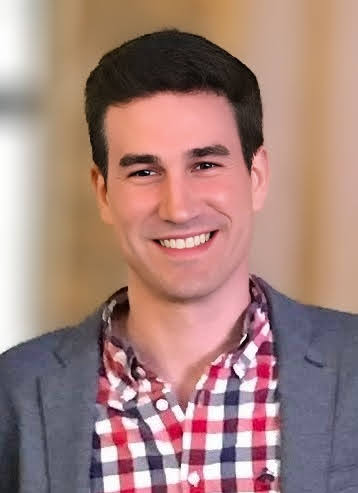
Office: 216 Audubon Hall
Department of Psychology
Louisiana State University
Baton Rouge, LA 70803
Email: jscimeca@lsu.edu
Dr. Scimeca is not accepting new students for Fall 2027.
Research Interests
My research examines the cognitive, computational, and causal basis of cognitive control and working memory. Flexible control of behavior is a hallmark of human cognition and is critical to successfully navigating modern life, yet cognitive control deficits are a common (but poorly understood) consequence of many developmental and neuropsychiatric disorders. The work in my lab combines formal models of behavior, neuroimaging, and various neurostimulation techniques to investigate the neural systems that support healthy cognitive control and memory function.
Two key themes guide my theoretical and methodological approach. First, given the centrality of cognitive control to many domains of cognition, I study flexible control in a variety of contexts – including working memory, declarative memory, visual attention, and decision making. The goal of this approach is to develop integrative theories that account for a range of empirical findings, and thus bridge disparate research areas within psychology and neuroscience.
Second, I use converging methods to connect behavior, formal models and neural data. To this end, my research combines a variety of computational approaches (e.g., reinforcement learning, diffusion models, quantitative models of working memory) and cognitive neuroscience techniques (fMRI, EEG, TMS). I am particularly interested in the inferential power of causal methods, and my work incorporates cutting-edge neurostimulation techniques like rhythmic TMS and simultaneous TMS-fMRI to investigate brain-wide causal dynamics. By delineating the basic causal mechanisms that support healthy cognitive control, the ultimate goal of these efforts is to help develop targeted interventions that can improve treatment for neuropsychiatric populations.
Examples of current research questions include:
- How do neural oscillations contribute to cognitive control, working memory, and visual attention?
- Are frontal and parietal cortex necessary for working memory function? Do they make dissociable contributions?
- Can we use computational modeling and targeted neurostimulation to improve working memory capacity?
- How do top-down control signals propagate throughout brain networks?
- How do frontal-striatal circuits contribute to cognitive control and long-term memory?
- Correlation does not necessarily imply causation. When correlational evidence from neuroimaging studies is inconsistent with neuropsychology evidence from patient populations, can we use neurostimulation methods to integrate these disparate findings and resolve theoretical debates?
Education
PhD, Cognitive Science, Brown University
BA, Biological Sciences & Psychology, University of Chicago
Representative Publications
Kiyonaga, A., Scimeca, J. M., & D’Esposito, M. (Registered Report). Dissociating the causal roles of frontal and parietal cortex in working memory capacity. Nature Human Behaviour.
Riddle, J., Scimeca, J. M., Pagnotta, M. F., Inglis, B., Sheltraw, D., Muse-Fisher, C., & D’Esposito, M. (2022). A guide for concurrent TMS-fMRI to investigate functional brain networks. Frontiers in Human Neuroscience.
Riddle, J., Scimeca, J. M., Cellier, D., Dhanani, S., D’Esposito, M. (2020). Causal evidence for a role of theta and alpha oscillations in the control of working memory. Current Biology, 30, 1748-1754.
Eichenbaum, A., Scimeca, J. M., & D’Esposito, M. (2020). Dissociable neural systems support the learning and transfer of hierarchical control structure. Journal of Neuroscience, 40, 6624-6637.
Scimeca, J. M., Kiyonaga, A., D’Esposito, M. (2018). Reaffirming the sensory recruitment account of working memory. Trends in Cognitive Sciences, 22, 190-192.
Kiyonaga, A., Scimeca, J. M., Bliss, D., & Whitney, D. (2017). Serial dependence across perception, attention, and memory. Trends in Cognitive Sciences, 21, 493-497.
Scimeca, J. M., Katzman, P. L., & Badre, D. (2016). Striatal prediction errors support dynamic control of declarative memory decisions. Nature Communications, 7, 13061.